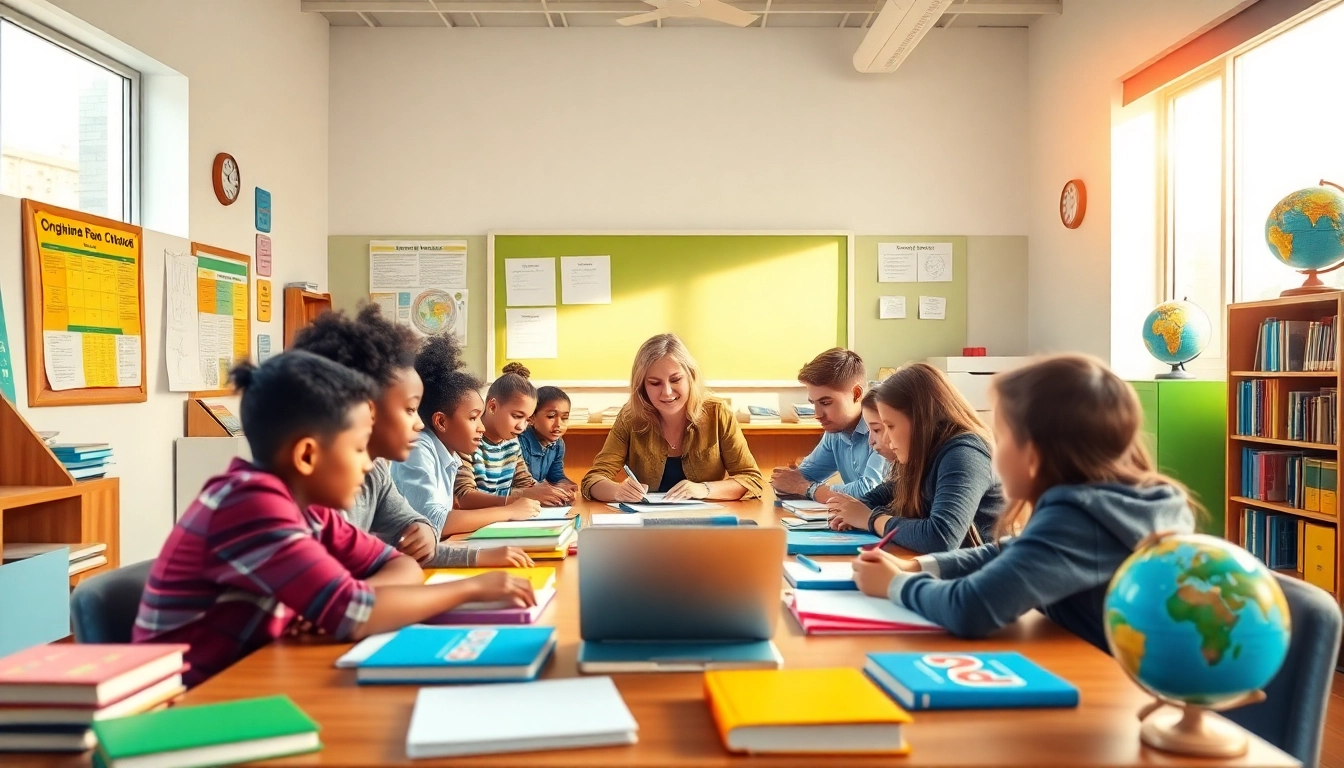
Understanding the Role of Education
Definition and Scope of Education
Education is a fundamental pillar of human development and societal progress. It encompasses the processes through which knowledge, skills, attitudes, and values are acquired by individuals. Education can take place in various settings and formats, including formal institutions like schools and universities, as well as informal contexts such as family environments and community interactions. The ultimate goal of Education is to foster critical thinking, promote citizenship, and enable personal and professional growth.
The scope of education is vast, covering diverse areas such as primary, secondary, and higher education, along with specialized training programs tailored for specific careers. An invaluable resource for further exploration can be found at Education.
Historical Perspectives on Education
Tracing the history of Education reveals a complex evolution from ancient civilizations to the modern era. In earlier societies, Education primarily occurred through oral traditions and apprenticeships, focusing on survival skills and community norms. As civilizations advanced, formalized systems of teaching emerged.
For instance, ancient Greece and Rome laid the groundwork for modern educational practices, advocating for the study of arts, sciences, and philosophy. The Middle Ages saw the rise of universities, while the Enlightenment catalyzed the emphasis on rationality and inquiry. The 19th and 20th centuries witnessed the democratization of Education, emphasizing universal access and the establishment of compulsory schooling laws.
Contemporary Education Trends
In today's rapidly evolving world, the landscape of Education is continuously transforming. Prominent trends include personalized learning, emphasis on STEM (science, technology, engineering, and mathematics) education, and the integration of digital technologies into traditional learning environments. These trends reflect a shift toward recognizing the diverse needs of learners and the necessity for education to adapt to the demands of the future workforce.
Moreover, the role of lifelong learning is increasingly acknowledged, as individuals must continuously update their skills in response to technological advancements and shifting job markets.
Types and Methods of Education
Formal vs. Informal Education
Education can be categorized into two primary types: formal and informal. Formal education involves structured learning experiences that occur within specific institutions, such as schools and universities. It is characterized by a systematic curriculum, certified educators, and formal assessments.
In contrast, informal education occurs outside these institutions and includes experiences such as family interactions, community service, and self-directed learning. This type of Education is often unstructured and may not lead to formal certification but can be equally valuable in developing skills and knowledge.
Online Education and E-Learning
The advent of technology has revolutionized how Education is delivered, giving rise to online education and e-learning platforms. These methods enable learners to engage in educational activities at their convenience, breaking geographical barriers and providing access to a vast array of resources.
Online education encompasses various formats, including massive open online courses (MOOCs), virtual classrooms, and mobile learning. This flexibility allows for personalized pacing, catering to different learning styles and preferences. Nonetheless, challenges such as maintaining engagement and ensuring quality remain critical considerations in the online Education landscape.
Vocational and Alternative Education Methods
Vocational education focuses on equipping individuals with specific skills required in the workforce. It typically bridges the gap between traditional education and employment by providing hands-on training in various skilled trades and technical fields. This method is vital for addressing discrepancies in the job market by aligning educational offerings with labor needs.
Alternative education methods, including Montessori, Waldorf, and experiential learning frameworks, emphasize holistic development and individualized learning paths. These approaches foster critical thinking, creativity, and collaboration, preparing learners to navigate complex real-world challenges.
Challenges in the Education System
Access and Equity Issues
Despite advancements in Education, significant barriers to access and equity persist. Factors such as socio-economic status, geographical location, and systemic discrimination often hinder marginalized groups from obtaining quality education. These issues emphasize the importance of implementing inclusive policies that promote equitable opportunities for all learners, regardless of their background.
Efforts such as scholarship programs, community outreach, and curriculum reforms are essential in addressing these disparities and ensuring that education serves as a leveling tool in society.
Curriculum and Instructional Challenges
Curriculum development remains a contentious issue in Education. Balancing the need for a comprehensive knowledge base with the demands of critical thinking and problem-solving skills poses a significant challenge. Furthermore, traditional instructional methods may no longer suffice in engaging modern learners, necessitating innovative pedagogical strategies.
Educators must continuously adapt their teaching methods, incorporating project-based learning, collaborative activities, and real-world applications to deliver pertinent and engaging content effectively.
The Impact of Technology on Education
While technology has undeniably enriched the educational sphere, its integration also presents challenges. Issues such as digital divide, cybersecurity threats, and the potential for distraction must be addressed. Moreover, educators need to leverage technology not only as a tool but also as a means to enhance critical thinking and analytical skills among students.
To maximize technology's benefits, professional development for educators is paramount, equipping them with the skills necessary to implement technological tools effectively and thoughtfully in their classrooms.
Best Practices for Effective Education
Fostering Student Engagement
Engagement is a crucial element in effective learning. Students are more likely to retain information and develop a love of learning when they actively participate in the educational process. Strategies such as interactive discussions, project-based learning, and hands-on activities stimulate interest and motivation among students.
Additionally, providing opportunities for student voice and choice empowers them to take ownership of their learning journey, fostering a deeper connection to the material.
Incorporating Diversity in Education
Diversity enriches the educational experience by exposing students to varied perspectives and experiences. An inclusive curriculum that represents diverse cultures, histories, and viewpoints encourages empathy and understanding among learners.
Educators must strive to create a classroom environment where all students feel valued and included. Professional development focused on cultural competency can equip educators with the skills necessary to foster such environments.
Measuring Educational Outcomes
Effective Education relies on systematically measuring outcomes to understand what works and what doesn't. Utilizing various assessment methods—such as formative, summative, and diagnostic assessments—can provide comprehensive insights into student learning and instructional effectiveness.
Continuous data analysis is essential for informing curriculum improvements, instructional strategies, and targeted interventions, ultimately enhancing educational success for all learners.
Future Opportunities in Education
Innovations in Learning Environments
The future of Education holds immense potential for innovation. Flexible learning environments, both physical and virtual, can cater to the diverse needs of modern learners. Strategies such as collaborative workspaces, technology-integrated classrooms, and outdoor learning experiences can enhance engagement and deepen understanding.
Moreover, the fusion of innovative pedagogical methods with technological advancements promises to redefine how learners interact with content and each other, paving the way for more personalized learning experiences.
The Role of Policy in Education Improvement
Policy plays a critical role in shaping the landscape of Education. Effective educational policies can provide the necessary framework for resource allocation, teacher training, and curriculum development. Advocacy for policies prioritizing equitable funding, support for under-resourced schools, and bolstered early childhood education initiatives can lead to systemic improvements across education systems.
Stakeholders, including educators, policymakers, and community members, must collaborate to create and implement policies that reflect the needs and aspirations of all learners.
Preparing for the Future Workforce
As the job market continues to evolve, education must adapt its focus to prepare students for the future workforce. Emphasizing skills such as critical thinking, creativity, collaboration, and digital literacy is imperative in ensuring that graduates are equipped to thrive in an increasingly complex environment.
Partnerships between educational institutions, industry leaders, and communities can facilitate relevant training and mentorship programs, bridging the gap between education and employment. By doing so, education can serve as a catalyst for economic growth and social mobility.