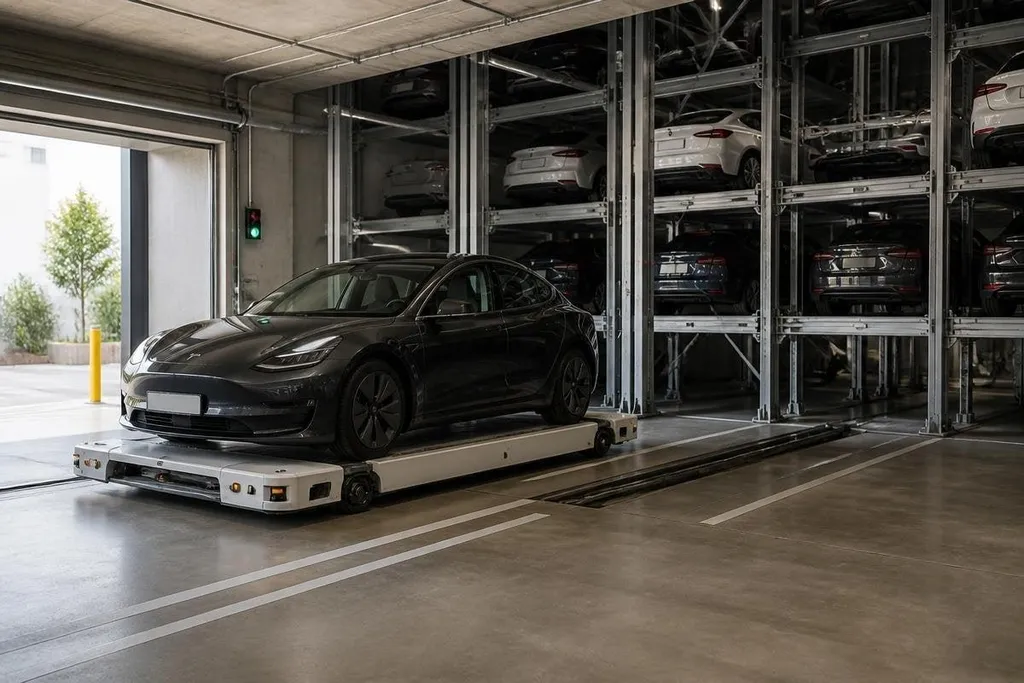
A parking robot takes a car at an entry bay, moves it without a driver, and places it in a storage slot. The useful change is simple: the garage can arrange cars by available space instead of by the width needed for people to open doors.
Quick read
- Cars stop at a handoff bay before the robot takes over
- Pallets, lifts, cameras, and drive units handle the parking move
- Building cost, wait time, and emergency access decide if the system fits
How the parking move works
The driver enters a marked bay and leaves the car there. The system checks the vehicle’s position, measures its size, and asks the driver to leave before movement starts.
A robot then carries or guides the car to a storage slot. Some designs use a mobile platform under the tires. Others move pallets between levels, much like shelves moving goods inside a warehouse.
Sensors help the system find the car and keep its path clear. Cameras can read the bay, LiDAR can measure nearby objects, and wheel encoders can track robot movement.
Software combines those inputs before it sends a drive command. The car stays switched off during this process, which removes the need for a robot to control the steering wheel, gear selector, or pedals.
It also limits the job to moving a parked vehicle from one known point to another.
Why cities are testing them
A normal garage must leave room for doors, ramps, turning circles, stairs, and people walking beside cars. A storage system can place cars closer together because people leave the building before the car enters its slot.
That can change the shape of a garage. A narrow site may hold more cars on the same ground area, or a developer may fit parking below a smaller building footprint. The result depends on the lift design, fire rules, ceiling height, and the number of entry bays.
The system can also reduce the time drivers spend searching for a free space. A control system records where each car sits and sends it to a handoff bay when the driver requests it. The wait still depends on the number of lifts, robots, and cars ahead in the queue.
This is where parking robots connect to urban mobility. A garage that takes less street frontage may leave more room for homes, shops, trees, or a bus lane. That result belongs to the building plan, not to the robot alone.
Space savings depend on recovery: a blocked lift or lost sensor can stop car retrieval across the garage. Parking robotics reports from Robot24.com can place those failure points beside named sites, test dates, and recovery plans before the next section looks at where the system can fail.
Where the system can fail
The handoff bay becomes the first control point. A car parked outside the marked area can block sensors or leave its tires beyond the platform. A roof box, trailer, bike rack, or low front splitter can also change the vehicle’s size and weight.
The software needs clear rules for faults. If a sensor reports an object in the path, the robot should stop and ask for help. If power fails, the garage needs a tested way to release cars without sending people into an active movement area.
Waiting time can grow during busy periods. One car may leave quickly, but several cars arriving at once can fill the queue. A garage with one lift has a different capacity from a garage with several lifts, even when the storage area looks similar.
Maintenance matters too. Drive motors, lift chains, pallet guides, sensors, and control computers all need checks. A blocked guide or failed sensor can affect many parking spaces at once because the cars share the same movement equipment.
What to check before a project
A city planner, building owner, or transport operator can use this short check before choosing a system:
- Measure the site: record ceiling height, floor shape, ramp access, and space for entry bays.
- List vehicle limits: set rules for height, length, weight, trailers, roof boxes, and damaged cars.
- Count peak demand: map arrival and pickup periods instead of using the daily average.
- Plan faults: define how staff open the garage, recover a car, and isolate a failed robot.
- Price the full system: include construction, power, software, service visits, spare parts, and staff training.
- Test the street effect: check whether shorter parking search time changes traffic at the entrance.
I'd treat parking robots as a building tool first and a transport system second. They can use tight space well, but their value disappears if drivers face long waits or staff can't recover a car safely.
The next useful measure is not the number of cars a brochure places underground. It is the average pickup time during the busiest hour, recorded after the garage has real traffic.